
Introduction
There is a common misconception that Muslim-majority countries deny rights to their minority citizens, especially Hindus. Some even argue that Indian Muslims should not seek equal rights because Muslim countries allegedly suppress their Hindu minorities. Let’s examine the facts.
Global Human Rights Commitments
Many Muslim-majority countries like Indonesia, Malaysia, and the UAE are signatories to the Universal Declaration of Human Rights (UDHR) and the International Covenant on Civil and Political Rights (ICCPR), two key UN treaties that guarantee freedom of religion and protection of minorities. These international commitments legally bind Muslim-majority countries to uphold the rights of Hindus and other non-Muslims.
Examples from Malaysia and Indonesia
Indonesia, the world’s largest Muslim-majority nation, is home to around 1.7% Hindus. Malaysia, another Muslim-majority country, has 6.3% Hindus. In both countries, Muslims and Hindus live in peace and harmony. Some of the world’s most beautiful temples are found in Malaysia and Indonesia.
The several-kilometres-long Thaipusam festival rally in Malaysia is world-famous. Malaysia even declares Thaipusam a national holiday.

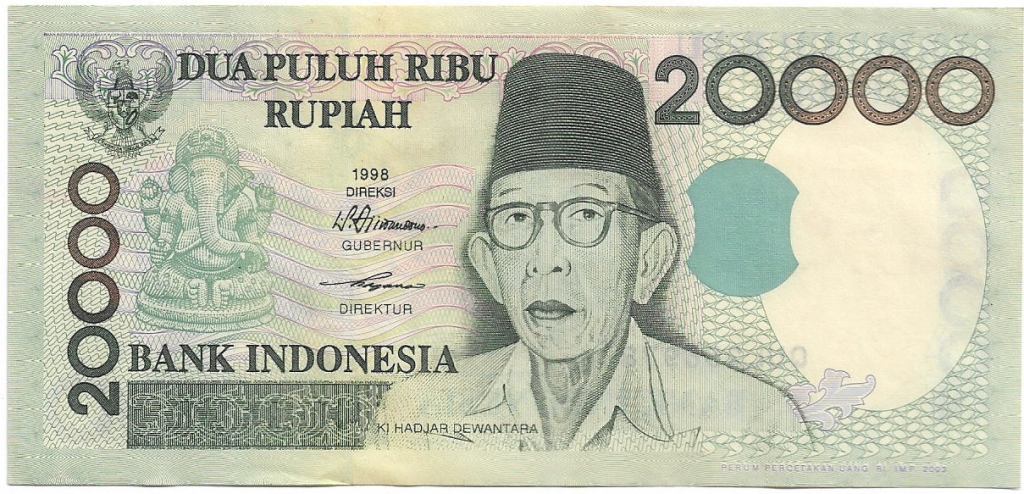
Indonesia once even issued a currency note featuring the deity Ganesha.
Personal Laws for Hindus
Hindus in Indonesia and Malaysia have their own personal laws. This clearly demonstrates that Muslim countries grant rights and freedoms to their non-Muslim citizens.
- Indonesia: The Hindu Dharma Council oversees marriage and family laws for Hindus.
- Malaysia: The Hindu Endowments Board manages temples and religious trusts, while Hindu marriages follow Hindu customs legally recognized by the state.
Have you ever heard of communal riots between Muslims and Hindus in Malaysia or Indonesia? Isn’t this proof that Hindus in these Muslim countries enjoy freedom and live in harmony with the Muslims?
Beyond Southeast Asia
Even in the Gulf, Hindus freely practice their faith. The UAE, for instance, has temples in Dubai and Abu Dhabi, officially inaugurated by top leaders.
What about Saudi Arabia?
Critics often cite Saudi Arabia. However, Saudi Arabia does not represent Islam, and nowhere does the Quran ask Muslims to emulate Saudi laws. Just as the laws of Nepal do not represent Hinduism, the laws of Saudi Arabia do not represent Islam.
It is also important to note that Saudi Arabia has 100% Muslim citizens. In every country, laws distinguish between citizens and foreigners. For example: In India, can a foreigner purchase land in his own name? The answer is No. But would anyone interpret this law as oppression of freedom?
Similarly, in Saudi Arabia, laws and policies differ for foreign residents and citizens. For example: A Muslim from India, cannot buy land or build a mosque in Saudi. This makes it clear that such laws are based on national policy, not on religion.
Islam on Treatment of Minorities
Islam as a faith, affirms rights and freedom for the non-Muslim citizens living in a Muslim country.
Prophet Muhammad (peace be on him) declared:
Be careful! Whoever is cruel and oppresses a non-Muslim living under a Muslim rule, or restricts their rights, or burdens them beyond their capacity, or takes anything from them against their free will; I (Prophet Muhammad) will argue for him (in support of the non-Muslim) on the Day of Judgment.
Abu Dawud # 3052
This Prophetic saying highlights the importance of treating non-Muslims living in a Muslim country with fairness and dignity. It also establishes that it is an obligation upon Muslim rulers to safeguard the welfare and rights of their non-Muslim citizens.
A Warning Against Oppression
When Prophet Muhammad (peace be upon him) sent Muadh as the governor of Yemen, which had a Christian minority, he advised him:
Be afraid of the curse of the oppressed, as there is no screen between their curse and God. (i.e don’t think about oppressing them just because they are a minority, as God will accept the curse of the oppressed).
Bukhari # 2448
This powerful warning makes it clear that oppressing minorities simply because of their status is forbidden, and that God Himself hears and answers the prayer of the oppressed.
The Prophet’s Example
The Prophet not only spoke about the rights of minorities but also practiced them. During his rule, Jews enjoyed full freedom. On one occasion, the Prophet Muhammad (peace be upon him) himself borrowed barley from a Jewish citizen.
God’s Messenger bought some foodstuff (barley) from a Jew on credit and mortgaged his iron armor to him (the armor stands for a guarantor).
Bukhari # 2916
This simple incident speaks volumes about the freedom non-Muslim citizens enjoyed under Islamic governance.
The Quran on Protecting All Places of Worship
The Quran commands the protection of all houses of worship.
If God did not repel some people by means of others, many monasteries, churches, synagogues, and mosques, where God’s name is much invoked, would have been destroyed. God is sure to help those who help His cause – God is strong and mighty.
Quran Chapter 22 Verse 40
This verse makes it clear that Islam does not permit attacking the places of worship of non-Muslims. On the contrary, their preservation is a divine command. Any Muslim country that violates these principles is acting against the teachings of Islam.
Conclusion
Real-life examples from Indonesia, Malaysia, and the Gulf prove that Hindus live peacefully and enjoy religious freedom in Muslim-majority countries. The Quran and the sayings of Prophet Muhammad (peace be upon him) not only affirm religious freedom but also obligate Muslims to protect the dignity, rights, and places of worship of all faiths.


